
The most common moment in alcohol recovery isn’t the dramatic one. It’s 9pm on a Tuesday. Work was bad. The bar is three blocks away. And the only thing standing between that moment and a relapse is whether someone, or something, is available to talk.
Most recovery apps aren’t built for that moment. They’re built for the calm parts of the day, when you have time to log your drinks, fill out a mood tracker, or read an educational module. The moment you actually need help, the last thing you want to do is navigate a complex interface.
That gap is where Sage starts.
The Problem
15 million Americans currently use alcohol reduction apps. 68% relapse within six months. The tools exist. The dropout rates tell you the tools aren’t working.
The core issue isn’t motivation. It’s friction. Existing apps require too much effort at exactly the wrong moments. Complex screens, daily forms, generic content, no real-time support. They’re built for engagement metrics, not for the 9pm Tuesday problem.
At the same time, voice AI infrastructure matured significantly in 2024. Costs dropped 60%. Latency dropped below two seconds. The technology to build a genuinely useful voice companion for recovery finally exists at a price point that makes a consumer product viable.
No major app has moved into that space. Reframe owns comprehensive education. Sunnyside owns text-based simplicity. Nobody owns voice.
What Sage Does
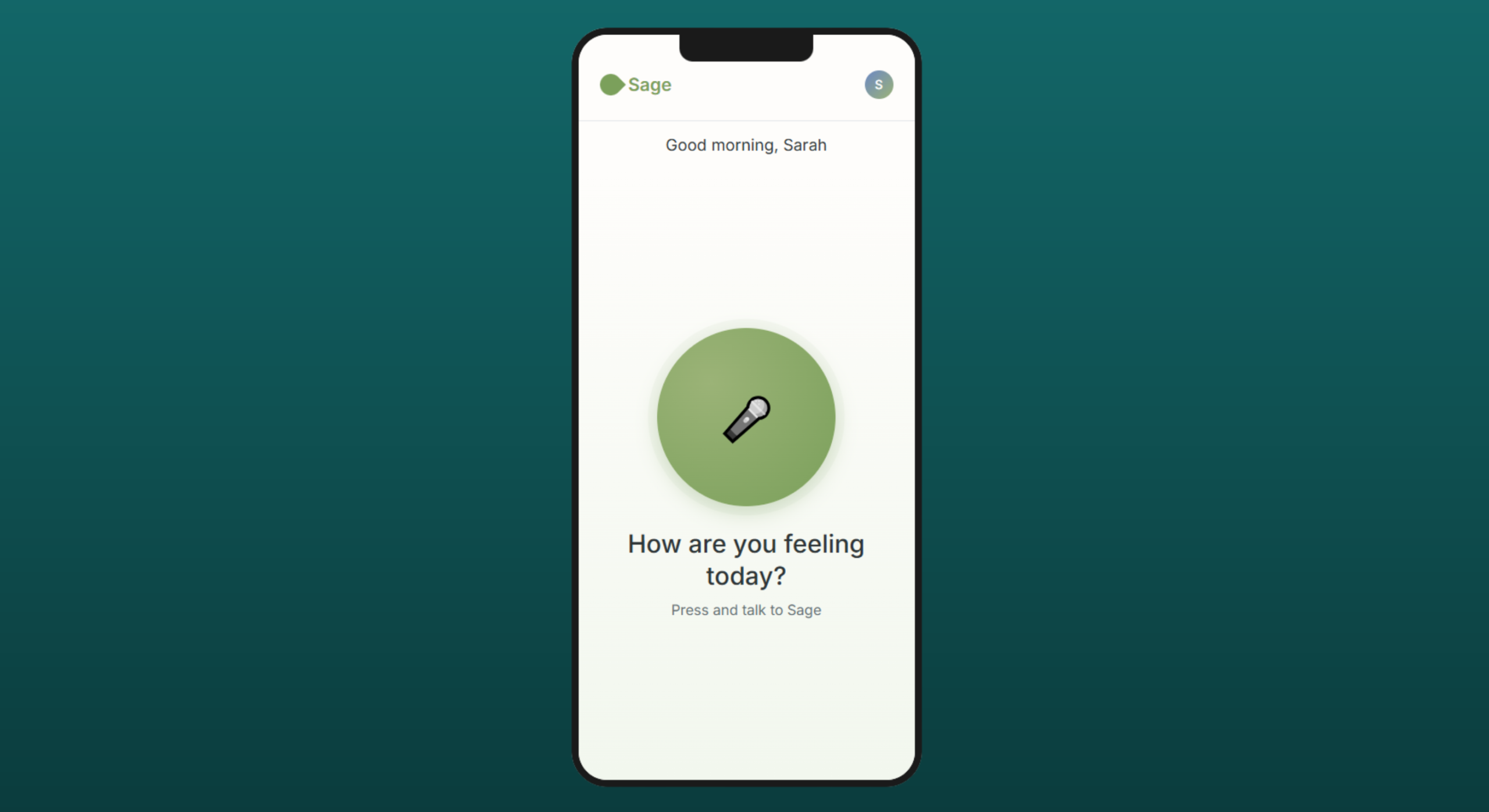
Sage is a voice-first alcohol recovery app. The entire experience centers on one button. You press it, and you talk.
The core workflow:
- Press the voice button on the home screen.
- Have a natural conversation with Sage about your day, your stress, your progress, or whatever is happening in that moment.
- Sage responds in real time, asks follow-up questions, and provides support based on what you share.
- Over time, Sage builds a picture of your patterns, triggers, and progress.
The AI remembers previous conversations. If work stress was a trigger last month, Sage knows that. If you went for a walk instead of going to the bar, Sage remembers that too and builds on it.
Beyond daily check-ins, Sage handles crisis moments directly. When it detects distress in your voice or conversation, it shifts into crisis support mode: calming techniques, professional resource referrals, emergency contacts. The support scales to what you need.
The app also tracks emotional patterns, identifies personal triggers, sets and monitors recovery goals, and delivers insights about your progress without overwhelming you with data.
Three subscription tiers cover the range of users. Free gives you basic daily check-ins with a five-minute conversation limit. Premium at $29 per month adds unlimited conversations, emotional intelligence features, and detailed pattern analysis. Pro at $49 per month adds predictive intervention, coaching integration, and family sharing options.
Who It Serves
Sage serves three groups.
- Individuals in recovery. Adults aged 25 to 55 seeking support for alcohol moderation or sobriety. They want privacy, convenience, and personalized support. They need something available at 9pm on a Tuesday, not just during business hours.
- The “sober curious” mainstream. Light drinkers are now the largest consumer segment in alcohol reduction. These users aren’t in crisis. They want to drink less, feel better, and have a tool that fits into a normal life without feeling clinical.
- Corporate wellness programs. Employee wellness is a growing B2B channel. Employers are actively looking for digital health tools that address alcohol and stress. Sage fits that category without the stigma of a traditional treatment app.
How It’s Built
Sage runs on a modern stack chosen for speed, cost efficiency, and scale.
OpenAI Realtime API handles voice processing. The 2024 cost reduction makes per-conversation economics viable at consumer pricing. Voice API costs run approximately $0.25 per conversation, which supports a 75% gross margin target at the $29 price point.
Conversational memory is maintained across sessions so Sage builds a genuine relationship with the user over time, not just a series of disconnected check-ins.
Emotional analysis runs on voice patterns and speech content to detect stress, mood, and potential triggers in real time. This is what enables the shift into crisis support without the user having to explicitly ask for it.
All conversations are end-to-end encrypted. Users control retention, export, and deletion of their own data. Privacy is a core product requirement, not an afterthought.
The app is designed for native iOS and Android with integration capabilities for health tracking apps and emergency services where users approve it.
The Business Case
The global addiction treatment market reaches $16.2 billion by 2034. The US digital health segment for addiction sits at $1.8 billion today. 15 million people are already using alcohol apps. Another 50 million are potential users.
The moderation movement is mainstream now. Alcohol-free spirits, mindful drinking programs, and sober curious communities have normalized reducing alcohol without requiring the label of addiction. That shifts the addressable market significantly.
Voice AI is the right technology at the right time. 22% of the most recent YC class built voice agent startups. Healthcare voice applications show 30% efficiency improvements. Consumer behavior is already moving toward conversational interfaces for health decisions.
The unit economics work. Customer lifetime value projects above $400 based on industry benchmarks. Customer acquisition cost targets below $50. Voice differentiation drives organic growth in a way that generic wellness apps can’t replicate.
Current Status
Sage is in prototype with early users testing the core voice conversation workflow. Feedback is being collected from individuals in recovery, wellness-focused professionals, and potential B2B partners to shape the full product before a wider launch.
If you’re interested in early access, want to discuss partnership opportunities, or are a recovery professional looking for a tool to recommend to clients, reach out at hello@prairiecode.ai.